Cathartic
An interactive audiovisual installation where what you feel becomes what you hear and see.
- A.A. Year: 2025-26
- Students
Luca Trapella
Anna Impembo
Giorgio Mattina
Francesco Saverio Nisoli - Source code: Github
Description
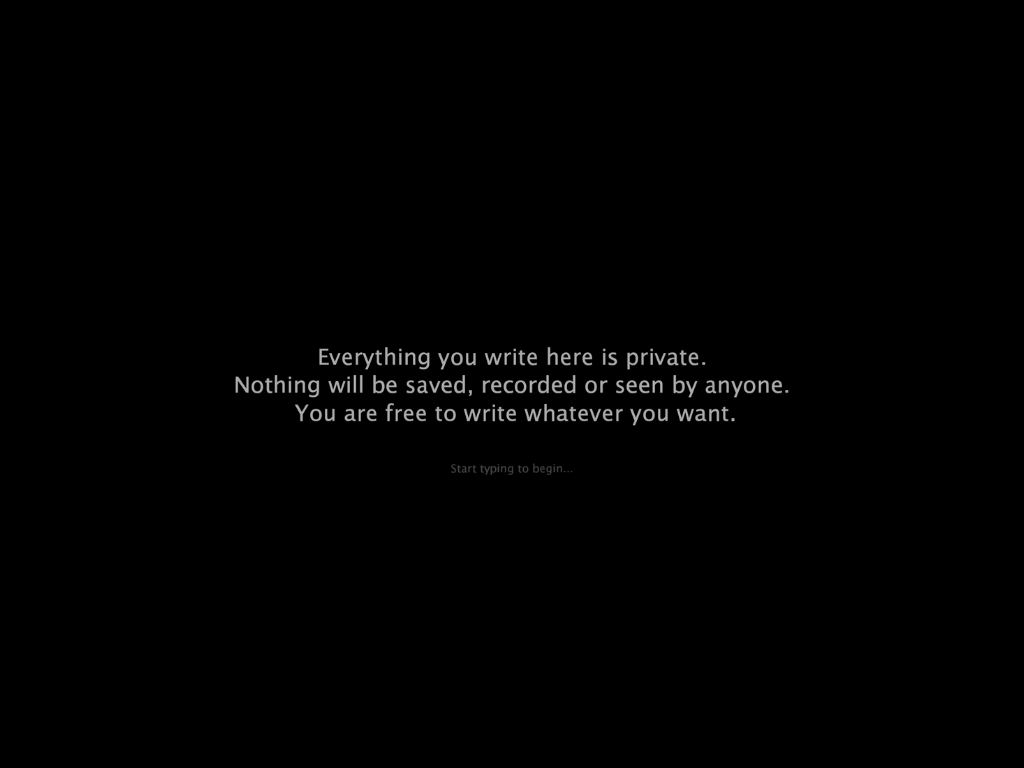
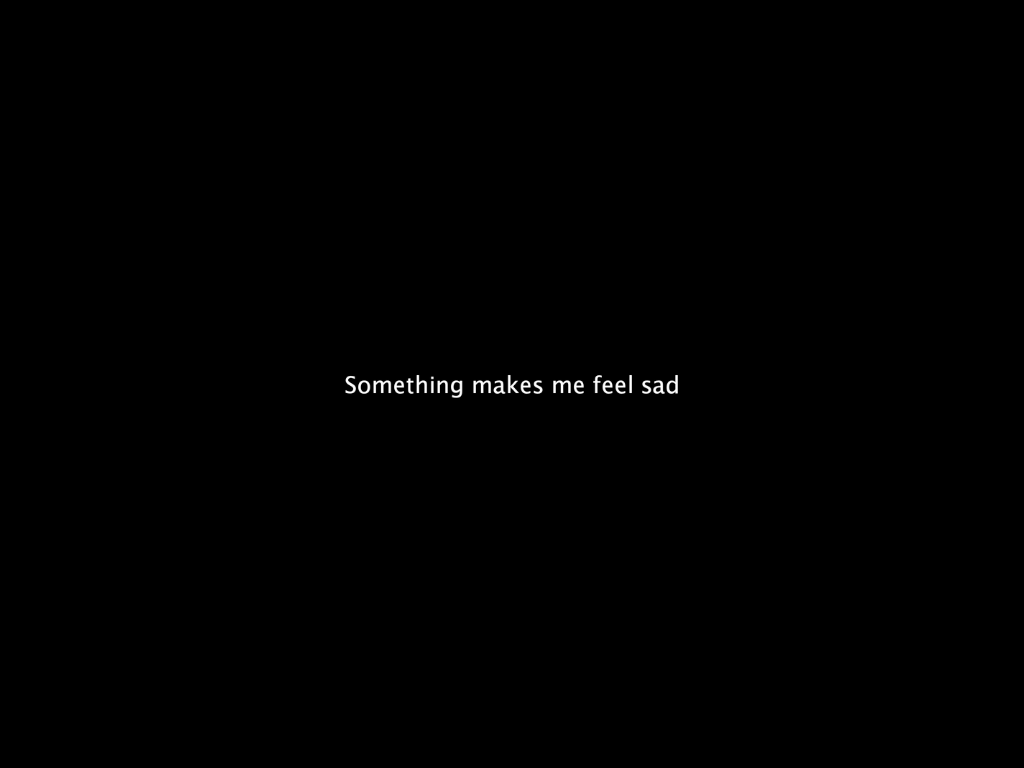
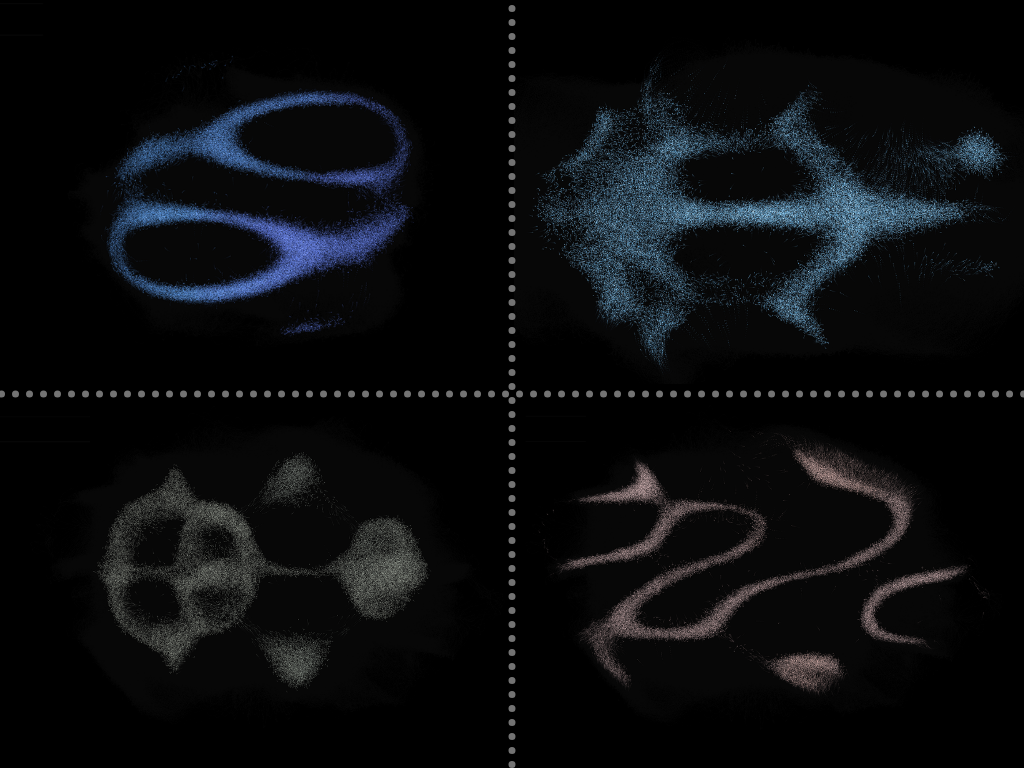
Cathartic is an interactive audiovisual installation exploring how artificial intelligence can support a personal and non-judgmental moment of emotional reflection. The project invites visitors to express something they are carrying inside: a feeling, a thought, a concern, or a secret. Rather than answering through language or attempting to interpret the visitor’s experience, the system transforms the submitted text into an evolving audiovisual environment. Cathartic is envisioned as an intimate, capsule-like installation in which the visitor can temporarily step away from the surrounding environment and focus on the generated experience. The experience begins with a short disclaimer explaining the temporary and private nature of the interaction. The visitor is then invited to type a message. Once submitted, the text is processed in real time by an emotion-detection model that produces a continuous, multi-emotion representation rather than assigning the message to a single emotional category. The detected emotions influence a real-time generative music model by controlling a combination of weighted textual and audio prompts. At the same time, they define the general colour palette and visual character of a responsive particle system inspired by Chladni resonance patterns. The generated music is analysed through amplitude tracking, frequency analysis, and transient detection. These audio features control the immediate motion of the particles, including their expansion, rotation, vibration, and reorganisation. A moving Perlin-noise field distributes the colours associated with the dominant emotions across the visual space. The visitor’s original text is also rasterised and used to define the initial particle distribution. The written message therefore becomes the starting shape of the visualisation before gradually dissolving into sound, colour, and movement. The submitted text is processed only for the duration of the interaction and is not intentionally stored in a file, database, or user profile. At the end of the audiovisual sequence, the system displays a closing message and resets itself for the next visitor.
Challenges, accomplishment and lessons learned
Challenges
One of the main challenges was integrating several environments into a single real-time system. The final pipeline connects a local Processing application, a local Python emotion-detection system, a remote GPU running Magenta RT, a browser-based audio player, and a virtual audio-routing system. Another significant challenge was managing the computational requirements of real-time music generation. The version of Magenta RT used in the project requires an A100-class GPU to generate audio continuously, making it necessary to host the model remotely while maintaining sufficiently responsive communication with the local installation. We also had to determine how to translate emotional information into music and visuals without reducing each text to one rigid category or relying only on arbitrary emotion–colour associations. On the visual side, we needed to balance responsiveness and stability. The particle system had to react clearly to the generated sound while remaining visually coherent, computationally sustainable, and consistent with the ambient and acousmatic character of the music.
Accomplishments
One of our main accomplishments was identifying and integrating an emotion-detection model that was both lightweight enough for real-time interaction and capable of representing the complexity of the visitor’s text through multiple simultaneous emotional values. We also succeeded in adapting a real-time generative music model to the specific artistic identity of the project. Through a combination of textual prompts, audio references and shared musical constraints, we directed Magenta RT towards a coherent ambient, electronic and acousmatic sound world while preserving variation between individual interactions. Another important achievement was using a meaningful translation of emotional information across different media. The detected emotions do not correspond to a single predefined output: instead, their relative strengths influence musical prompts, colour palettes, particle behaviour and the overall visual energy of the experience. We are particularly proud of having created an audiovisual environment that remains aesthetically coherent while responding dynamically to different forms of external input. Emotional data determines the slower and broader evolution of the experience, while real-time audio analysis produces immediate changes in particle motion and visual behaviour. Finally, we integrated emotion detection, generative music, audio streaming and responsive visuals into a complete real-time interactive pipeline, transforming a private written thought into a temporary and personalised audiovisual experience.
Lessons learned
One of the main lessons we learned was the importance of balancing model performance with computational sustainability. The most powerful model is not necessarily the most suitable one for an interactive installation: it must also be efficient enough to operate reliably within the available hardware, software environment and real-time constraints. This led us to evaluate each model not only in terms of output quality, but also in terms of latency, resource consumption and ease of integration. We also learned that scientific research can significantly improve the quality and credibility of an artistic and technical project. Consulting academic literature helped us make more informed decisions when translating emotions into sound, colour and movement. Rather than relying exclusively on subjective associations, we based part of the audiovisual mapping on established findings related to emotional valence, arousal and psychophysiological perception. More broadly, the project showed us that a convincing interactive experience emerges from the combination of creative intuition and evidence-based design. Artistic choices remain essential, but they become more coherent and defensible when they are supported by research, testing and technical feasibility.
Technology
Processing / Java, Processing Sound library, Python, Magenta RT, GoEmotions, RoBERTa, PyTorch, JAX, CUDA, Gradio, Open Sound Control — OSC, WebSocket, Web Audio API, AudioWorklet, Lightning AI, FFT audio analysis, Amplitude tracking, Transient detection, Particle systems, Chladni patterns, Perlin noise, Finite-state machines, Real-time audio streaming, BlackHole / VB-Audio Virtual Cable,Students
Luca Trapella: conceived the core idea and overall concept of Cathartic, shaping the
project’s artistic and interactive direction. He researched the AI models used for emotion
detection and worked on the deployment and real-time parameter control of Magenta RT on
Lightning AI, as well as audio streaming and virtual audio routing. He also contributed to the
physics and initial audio reactivity of the particle system.
Anna Impembo: esigned and developed the visual component of the project, integrating
the particle system with emotion and audio data. She refined the Chladni-inspired motion,
colour behaviour, visual dynamics and overall aesthetics.
Giorgio Mattina: implemented the real-time generative music system and developed the
communication infrastructure connecting the different components of the project. His work
included OSC and WebSocket communication, prompt transmission to the remote model,
and real-time audio streaming through WebSocket.
Francesco Saverio Nisoli: researched artificial intelligence models for generative music and
worked on prompt engineering. He designed the emotion-to-music mapping, defining and
refining the textual and audio prompts used to condition Magenta RT, including the neutral
state, the main emotional reference prompts, and the shared musical style constraints.